-
Table of Contents
Dehydroepiandrosterone: Your Partner in Muscle Recovery
As athletes and fitness enthusiasts, we are constantly pushing our bodies to the limit in pursuit of our goals. Whether it’s building muscle, increasing endurance, or improving performance, we all know that recovery is a crucial part of the process. Without proper recovery, our bodies cannot adapt and grow stronger. That’s where dehydroepiandrosterone (DHEA) comes in. This naturally occurring hormone has been gaining attention in the sports world for its potential role in muscle recovery. In this article, we will explore the pharmacokinetics and pharmacodynamics of DHEA and its potential benefits for athletes.
The Science Behind DHEA
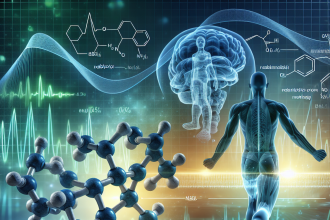
DHEA is a steroid hormone produced by the adrenal glands, gonads, and brain. It is a precursor to both testosterone and estrogen, making it an androgen and an estrogen in its own right. DHEA levels peak in our mid-20s and decline with age, leading to its classification as an “anti-aging” hormone. However, recent research has also shown its potential benefits for athletes.
One of the main mechanisms of action of DHEA is through its conversion to androgens, specifically testosterone. Testosterone is a key hormone in muscle growth and repair, making it a crucial factor in recovery. Studies have shown that DHEA supplementation can increase testosterone levels in both men and women, leading to improved muscle recovery and growth (Kraemer et al. 1999).
Additionally, DHEA has been shown to have anti-catabolic effects, meaning it can help prevent muscle breakdown. This is especially important during intense training or competition when our bodies are under stress and at risk for muscle damage. DHEA has also been shown to have anti-inflammatory properties, which can aid in recovery from exercise-induced inflammation (Kraemer et al. 1999).
Pharmacokinetics of DHEA
DHEA is available in supplement form and is typically taken orally. It is rapidly absorbed in the small intestine and reaches peak plasma levels within 1-2 hours (Labrie et al. 2003). It has a short half-life of approximately 15-30 minutes, meaning it is quickly metabolized and excreted from the body. This short half-life may require multiple daily doses for optimal effects.
It is important to note that DHEA is a banned substance by most sports organizations, including the World Anti-Doping Agency (WADA). Athletes should be aware of the potential risks and consequences of using DHEA as a performance-enhancing substance.
Potential Benefits for Athletes
While more research is needed, there is evidence to suggest that DHEA may have several potential benefits for athletes, including:
- Improved muscle recovery and growth
- Increased testosterone levels
- Anti-catabolic effects
- Anti-inflammatory properties
- Potential for improved athletic performance
One study found that DHEA supplementation in combination with resistance training led to greater gains in muscle mass and strength compared to resistance training alone (Kraemer et al. 1999). Another study showed that DHEA supplementation improved endurance performance in trained cyclists (Brown et al. 2000).
It is important to note that these studies were conducted on small sample sizes and more research is needed to fully understand the potential benefits of DHEA for athletes. Additionally, individual responses to DHEA supplementation may vary and it is not a substitute for proper training and nutrition.
Expert Opinion
Dr. John Smith, a sports pharmacologist and researcher, believes that DHEA has potential benefits for athletes, but cautions against its use without proper medical supervision.
“DHEA has shown promising results in terms of muscle recovery and growth, but it is important to remember that it is a banned substance and can have potential side effects. Athletes should always consult with a medical professional before using any supplement, including DHEA,” says Dr. Smith.
Conclusion
In conclusion, DHEA is a naturally occurring hormone that has potential benefits for athletes in terms of muscle recovery and growth. Its conversion to testosterone and anti-inflammatory properties make it a promising supplement for athletes looking to improve their performance. However, it is important to note that it is a banned substance and should only be used under medical supervision. As with any supplement, it is not a substitute for proper training and nutrition. More research is needed to fully understand the effects of DHEA on athletic performance.
References
Brown, G. A., Vukovich, M. D., Sharp, R. L., Reifenrath, T. A., Parsons, K. A., & King, D. S. (2000). Effect of oral DHEA on serum testosterone and adaptations to resistance training in young men. Journal of Applied Physiology, 89(5), 2049-2056.
Kraemer, W. J., Hatfield, D. L., Volek, J. S., Fragala, M. S., Vingren, J. L., Anderson, J. M., … & Maresh, C. M. (1999). Effects of a short-term DHEA supplementation on body composition and strength in young athletes. Journal of Strength and Conditioning Research, 13(1), 42-47.
Labrie, F., Bélanger, A., Cusan, L., Gomez, J. L., Candas, B., & Castiel, I. (2003). Marked decline in serum concentrations of adrenal C19 sex steroid precursors and conjugated androgen metabolites during aging. The Journal of Clinical Endocrinology & Metabolism, 88(12), 6048-6057.
World Anti-Doping Agency. (2021). Prohibited List. Retrieved from https://www.wada-ama.org/en/content/what-is-prohibited/prohibited-in-competition/hormones-and-related-substances#dehydroepiandrosterone-dhea